
In celebration of Joachim Trier’s critically acclaimed new film Sentimental Value, a retrospective on his seminal Oslo Trilogy
Many great film directors question through art the meaning of life, one’s purpose, and other pressing existential thoughts and doubts that’s plagued us mere mortals since time immemorial. The “coming-of-age” film in particular has been a go-to milieu for filmmakers to explore the pains and pleasures of youth and the Herculean effort it takes to navigate life’s ups and downs to reach one’s hard-earned transition into adulthood. Cinema is populated with excellent and insightful films showcasing the beautifully rich and complicated lives of young people, from Francois Truffaut’s classic The 400 Blows to the seminal 80s nostalgia-glow flick Stand by Me, as well as more recent, but no less exciting projects from auteurs like Greta Gerwig and Paolo Sorrentino in Lady Bird and The Hand of God, respectively.
Norwegian director Joachim Trier’s sublime Oslo Trilogy (2006’s Reprise, 2011’s Oslo August 31st and 2021’s The Worst Person in the World), certainly feels like a coming-of-age of sorts, but unlike the typical narrative journey of youth to adulthood, Trier is much more interested in exploring the uncertain fluidity of the in-between; the brutal, glum, awkward, frustrating, disheartening, but ultimately enlightening experience of what it means to actually grow up as an adult in your turbulent twenties and thirties. Trier understands that adulthood is a constant work-in-progress and a Syssiphean effort of failing upwards and then failing again with no cushion to break your fall. These films explore the unanswered but ubiquitous pressing questions that ruminate within us when we’re knee-deep in the prime of our lives attempting to configure some meaningful semblance of a life.
Who defines success?
What does it look like?
Is this how it was supposed to be?
These questions haunt us with an ever-present severity that makes us question our every move.
Unlike the slow, nimble pace of childhood, adulthood is a seismic tidal wave of impossible expectations and broken dreams and promises. You are forever pushing up against its relentless brutality as it quickly rips you up and takes you under, forcing you to look back helplessly at your youth and wonder where it all went.
Trier’s imperfect but ultimately sympathetic protagonists are the ideal prisms to explore the rocky terrain of young adulthood – the tumultuous time of chronic insecurity and self-doubt where every effort carries the weight of the world and every decision is tinged with compromise or a dangerous sense of irreverence. It’s an all too-human relatability that makes this sensational trilogy of films such vital viewing not only for cinephiles, but for anyone who feels like an eternal fuck-up and are still trying to make something of their lives while everyone else around them seemingly has it all figured out.
REPRISE (2006)

“I wish we could meet all over again.”
The idea of second chances – the desire to do it all over again, to recapture lightning in a bottle – a reprise as it were, somehow expecting things to be better, different, or just as meaningful the second time around – is the driving force behind Joachim Trier’s Reprise, which focuses on two young writers in the infancies of their careers and their difficulties in managing success, defeat, relationships, and the painful realities of what a creative life entails.
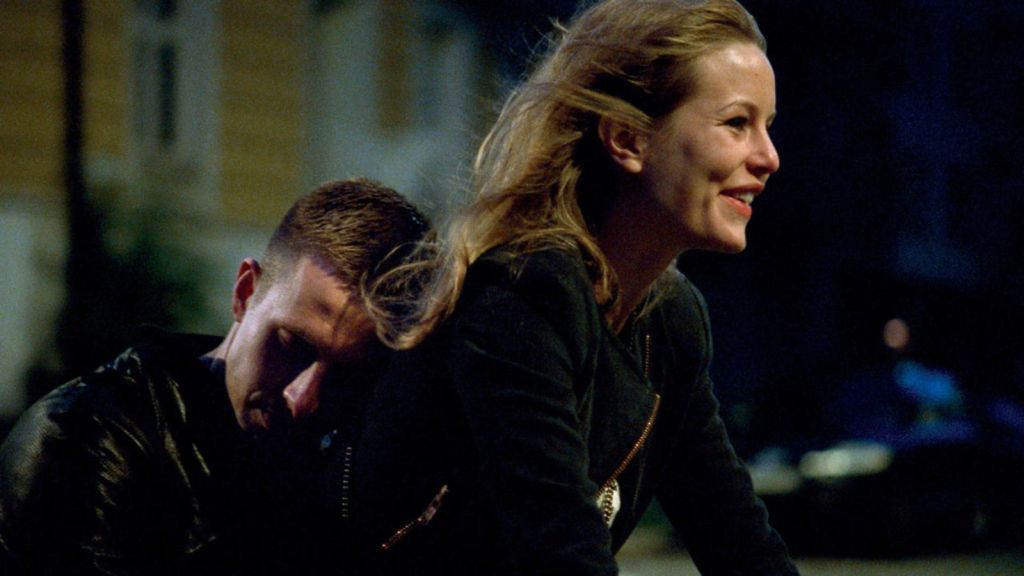
Reprise opens with Phillip and Erik standing before a mailbox before they post their manuscripts, two eager and aspiring writers who crave renown and notoriety. Through jumpy editing and frenetic energy, the film imagines an idealistic future – illuminating two wildly successful paths for both novelists as they navigate beautifully fulfilling and creatively influential careers. In reality, however, both men (in their early twenties), have two very different personal and career trajectories, as Erik’s manuscript is rejected, while Phillip’s is accepted by a publisher and becomes a cult hit, subsequently throwing him into the spotlight as a new literary sensation. But success is not what Phillip expected, and not long after he is admitted to a psych ward after a failed suicide attempt, likely exacerbated by an intense but destructive relationship with college student Kari.
Phillip is stifled by his failed relationship with his girlfriend and unable to reclaim the literary and artistic inspiration that fueled the success of his first manuscript. He tries in vain to desperately reclaim the fire that was lost – reuniting with the sweet but naive Kari and trying to reprise their trip to Paris where they first fell in love, moment-by-moment, picture-by-picture. Erik in the meantime continues to write, eventually accepted by a literary agent who helps publish his first novel. But his book is a critical failure and Erik’s reputation sours with a series of poor media appearances, leading the press to label him a poser and a hack and a pale imitation of his literary hero Sten Egil Dahl.
Director Joachim Trier explores the folly of youth, and the way our youthful idealism crumbles under the creeping realization of adulthood. Through the lives of two young artists, Trier delicately shows how youthful idealism can quickly turn into cynicism and self-doubt. Our ideas of fame, money, and renown are so ingrained in our psyches as the ultimate pinnacle of success that it ultimately becomes a jolt to our system when we realize that these tenets are defined by others, and are certainly not promised to us for eternity. We also feel the aching sense of melancholy that envelops young people in the prime of their personal and professional lives, particularly in how Erik and Phillip are truly unprepared to deal with the real-world ramifications of consequences and finality. The two friends slowly, but inevitably, begin to understand the finiteness of their actions as they realize life doesn’t offer second chances or an opportunity for rectifying our wrongdoings, or better yet, to experience again the flashing jolts of creativity or inspiration that fueled our drive to begin with. And as artists, life and art do not always intertwine in the ways you expect or hope for. Real life doesn’t follow a constructed form or narrative you can imitate or create from scratch – it is messy, complex, and unconfined by the limits of your imagination or desire. Reprise is a perceptive film about youth and art in that it reminds us that the lives we envisaged for ourselves rarely come to fruition, and that perhaps only in art can we truly create the hopes, dreams, and lives we pine for in our youth.
OSLO, AUGUST 31ST (2011)
“You’ll have a thousand nights like this one.”
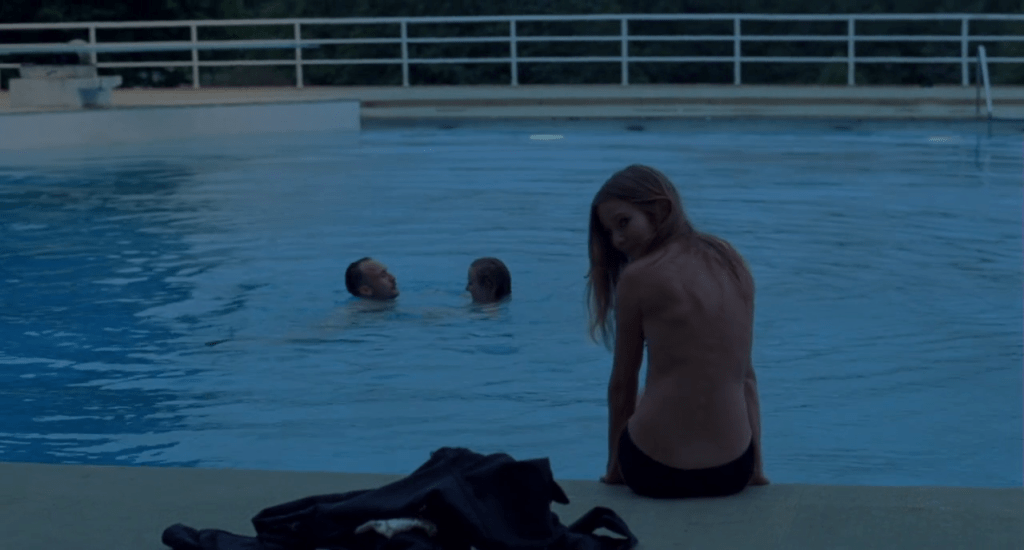
It’s the dark hours of a beautifully languid late summer night, filled with booze, drugs, partying, and culminating in a late night dive in a community swimming pool the night before it closes for autumn. Anders is thirty-four years old, and has experienced many thousand nights like this, whereas his newly-met friends are still in the prime of their twenties where freedom and possibility, fuck-ups and mistakes are still acceptable.
It’s not enough though. A thousand aimless nights are still a thousand aimless nights, ultimately a useless distraction that will never reclaim your sense of purpose nor assuage your impenetrable feelings of guilt and remorse.
The joy of being young and directionless – there’s a freedom in the seemingly unlimited temporality of youth. This is the second film in Trier’s Oslo Trilogy, and where Reprise zeroed in on the nascency of young adulthood, Oslo August 31st explores what happens when middle age slowly creeps up.
The film explores how one rebuilds a life when one has no will to live. For Anders is a recovering addict, and today has been the day that was supposed to relaunch his life and thrust him back into the swing of normality. But instead of hope and promise, Anders is bombarded with perpetual grim reminders of failed dreams and broken relationships as he traverses the city of Oslo where he is forever reminded of every squandered opportunity. Director Joachim Trier intuitively understands that addiction is not just a mechanism for self-harm, but an unconscious means to stave off the responsibilities that come with living an “adult” life – an acceptable life, a normal life by society’s set standards. Life is full of so many compromises and willful delusions, that the fleeting lure of a drug-induced high is the only source of respite in a disposable world.
Anders has already attempted to end his life earlier in the morning by placing several heavy rocks in his suit and submerging himself in a lake. He fails, and instead ventures into the city where he is faced with past demons and an uncertain future. He meets long-time friends who are seemingly thriving and living the elusive dream – a family, stable job, inviting flat – but are still plagued by an unquenchable restlessness and an itching longing for adventure. They’ve “settled”, like most do, and this is the future Anders must look forward to in a sober world full of jobs, deadlines, and responsibilities. This is the world deemed safe by the unseeable but omniscient force that compels everyone to live comfortably, abhor vices, and reject conflict. It’s also a world where Anders increasingly feels dejected from, exacerbated by his strained and broken relationship with his sister, and his fragile relationship with his parents who have been forced to sell his childhood home to pay for his rehabilitation expenses. He has the daunting task of starting from scratch to obtain a future he cannot envision.
Oslo August 31st understands that sobriety is not a magical cure or reliable substitute for happiness. It doesn’t heal the depression or alleviate the pangs of regret – it magnifies the pain and holds up a mirror to your failings. It does not reclaim the youth wasted in a reckless haze of tragic decisions and brash moments, and the prospect for redemption is futile when you realize you will never regain what was lost. Anders is representative of so many recovering addicts who are overwhelmed with the prospect of daily living and do not have a legitimate support system to cobble together a new personhood, sadly leading to an almost inevitable relapse. Sobriety is a continuous effort, measured in days and dates from your decision to come clean – the time from August 31st to September 1st may be a seamless transition for some, but is a mountainous effort of resolve for those hardwired by addiction and trauma.
Oslo August 31st is undeniably the bleakest of Trier’s Oslo Trilogy, but perhaps the most honest, as he never ceases to deaden the sharp edges of Anders’s prickly disposition and morose sadness. He’s a broken soul in a confusing world, where even the tacit support of his friends and family is tinged with feelings of pity and contempt. The yin and yang, darkness and light of life is encapsulated within Trier’s tight screenplay as he juggles the trajectory of a man’s life as he transitions from addiction to recovery to relapse within the span of one fateful day. The triumph of sobriety is saddled with the painful reality of uncertainty and loneliness. Who are you if not this person?
THE WORST PERSON IN THE WORLD (2021)
“I feel like a spectator in my own life.”
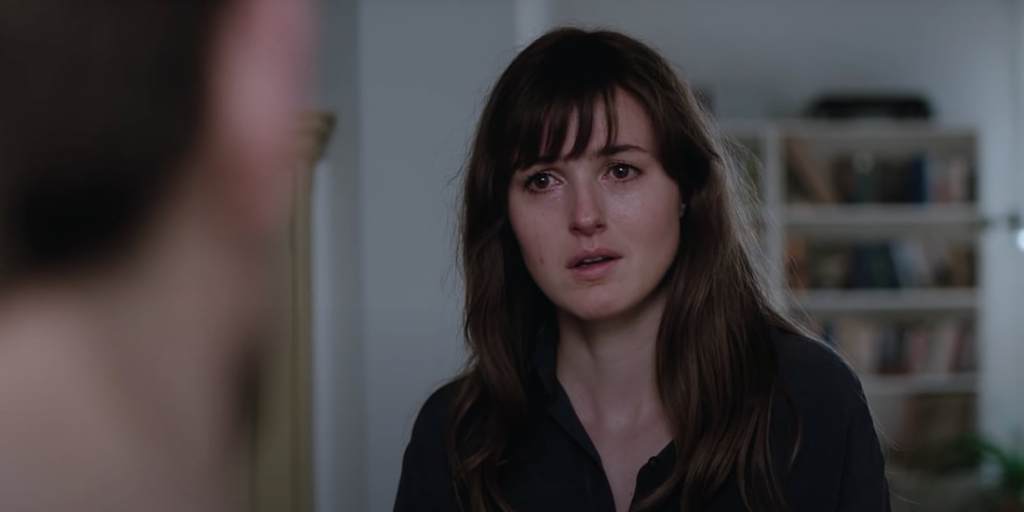
So confesses our heroine Julie, memorably portrayed by Renate Reinsve who deservedly won Best Actress at the 2021 Cannes Film Festival. It’s a small, but profound observation that certainly resonates with every twenty-something who is slowly approaching thirty and unable to show anything for it. For Julie is in some sense a wandering gypsy, moving from experience to experience without a clear end goal in sight. She captures that frightful feeling of dissociation, of feeling yourself slink through life as time marches on, seemingly leaving you adrift while others advance, make choices, and become the heroes of their own destinies.
This is the perfect film that shows the restlessness of young adulthood, that impenetrable feeling of wanting more yet unable to obtain it. That dichotomous youthful trait of being impossibly ambitious, yet completely aimless. Throughout the film, Julie is a smart university student, who switches from a promising career in medicine to a degree in psychology. She then finds herself attracted to photography, but after graduation lands herself working in an Oslo bookstore. She moves from a comfortable, yet unfulfilling, relationship with a comic artist called Aksel (played by Anders Danielsen Lie), who is in his forties, to a hot fellow drifter named Eivind, a barista. Julie journeys from relationship to relationship on a quixotic quest to find something that sticks, while simultaneously morphing her identity to something malleable and adaptable, completely dependent on the relationship or crowd she finds herself in. Trier’s film underscores the nuances that come into play in the ways we perceive ourselves, particularly in how we define ourselves and our self-worth in relation to others. Julie’s two main relationships in the film are a study in these contrasts. Insecure and invisible around Aksel, she finds solace and an even footing in the equally unambitious Eivind. Aksel offers a certain amount of notoriety and tangential association to greatness, but his priorities revolve around a future with children and a house in the country akin to his similarly-aged friends. Eivind is handsome and kind, the sex is great, and the drugs are good, but it’s a boringly stagnant existence. Julie’s relationships are a study in self-imposed limits, a distraction to thwart off defining her own ambitions and developing her own self in relation to her romantic partners.
However, things take a turn in her relationship with Aksel when he returns later in the film and stakes an unexpected claim in Julie’s life, noticeably shifting her trajectory and forcing her to confront her past and present and what kind of future she craves. In one poignant moment as Julie and Aksel are reunited in the most unfortunate circumstance, Aksel confides to her that she was the “love” of his life and his “most important relationship.” Facing a terminal illness, Aksel shows how our perception of love shifts in the face of death, particularly our understanding of relationships. Aksel’s love for Julie perhaps may be more than she can ever reciprocate or understand, but it is an integral reminder that life is a series of experiences – some may be inconsequential for us, but may be immeasurable for others. Our influence on others is difficult to ascertain in the thick of our lives, and the joy, love, and happiness we shower on those we love is often not reciprocated in the ways we expect.

In one heartbreaking scene, Aksel confides to her:
“I don’t want to be a memory for you. I don’t want to be a voice in your head. I don’t want to live on through my art. I want to live in my flat. I want to live in my flat with you. I want to be happy together.”
Our lofty ambitions about life, success, art, and beauty are ultimately inconsequential when we are suddenly faced with the blunt reality of impending death. What matters most are the small experiences we share with those we love – in our flat, in our home, in our lives – and not the grand expectations of success or tenuous illusions of fame or money that we cannot take with us into the pit of death. Aksel’s confession is a painful reminder of the ephemeral nature of life – the finiteness of it, coupled with the unsettling fear that we will be forgotten. All we truly want to do is live, and our joy comes from our shared human connections and private moments of intimacy. It’s a sombering feeling to stumble upon your final moment where you’re left to contemplate not only the things you did not do or left unsaid, but what will transpire after you’re gone. Regardless of your work and legacy, will you be remembered by the ones you loved so much?
It’s fitting that Trier’s Oslo trilogy comes to an end in The Worst Person in the World, for what is transcendent about Julie’s journey is that it is just a beginning. She may not have found major career success or find herself in a stable partnership, but she’s finally settled into a sense of contentment, more confident in herself and her talents and now with a substantial block of life behind her to drive her forward. She’s lived, which comes with pain, loss, and heartbreak, but hopefully with a sense of gratitude and a sturdy resolve to march forward regardless of the self-doubt and setbacks that ultimately affect all of us on our journeys.
Trier’s cinematic, humanist triptych is a brilliant celebration of wayward youth, tumultuous love and heartbreak, and a blistering reminder that one’s momentous personal awakening happens when one realizes adulthood is not a big bang evolution from one form to the next, but an incremental series of steps, drawbacks, failures, and breakthroughs that ultimately lead to some semblance of what we recognize as life. May he continue to entertain, inspire, and enlighten us for years to come.
 Let me be frank
Leave a comment