
As America continues to crumble in 2025, the vast majority appears to idly stick their fingers in their ears or escape to the algorithmic safety of social media to assuage their fears, or conversely to confirm them. I’ve been trying to calm my foreboding dread by returning to my love of reading and cinema. I reject being a stick in the mud and accused of ignoring the horrors of the Trump administration and the deliberate and sinister dismantling of our constitutional liberties and due process, but I do think it’s healthy to engross yourself in other worlds to remind you that there are other stories that exist beyond your limited confinement. What is clearly lacking in the world now is not only empathy for others, but a severe lack of curiosity and understanding of the world around us. Art allows us to understand ourselves and our world through the effort and experience of others. And in this case – the reason I’m writing this essay – art unexpectedly reveals a new way of thinking about the world. Or at the very least a new lens to view our past and present and hopefully offer a solution for how to imagine our future.
I first heard of neutral zones in Patrick Modiano’s 2007 novel In the Café of Lost Youth. Neutral zones are the topic of an experimental book the narrator Roland – a friend/lover/admirer/companion of the enigmatic young woman Louki, whose presence haunts the lost souls of a long-forgotten Paris – is writing during this moment in his life. He describes them as:
“a series of transitional zones in Paris, no-man’s-lands where we were on the border of everything else, in transit, or even held suspended. Within, we benefited from a certain kind of immunity.“
Something profound, yet wistful struck me with this description. In a political sense, neutral zones are areas designated by states or governments to allow a “neutral” territory between opposing factions. In Modiano’s prose, however, neutral zones are ephemeral, suspended places where time seems to stand still. Some might call them liminal spaces where individuals are free from the burdens of their pasts and free to construct their identities for the future. This is why cities have such a strong, magnetic pull for the wayward gypsy and dreamer, for cities are brimming with alluring possibilities where artists, dreamers, loners, and thinkers have congregated, thrived and created their own identities.
But they don’t last forever. Like all things, they must come to an end, but this is not fatalistic for Modiano’s Roland:
“Neutral zones have at least one advantage: They are only a starting point and we always leave them sooner or later.”
Yet despite their reputation for immunity and creative possibility, neutral zones are not free of strife or hardship – nor does everyone escape alive. There is pain and a constant stream of doubt, for who are you in this ambiguous state of discovery and suspension? And if neutral zones are only temporary, where do you land after you exit? Like Modiano shows with the emotionally repressed and psychologically damaged Roland, those who do survive are burdened with an unquenchable thirst for clarity and a longing to retrace their steps. For neutral zones are not just a location or a thing or even a feeling – it’s a memory of something experienced and something lost. It’s returning to a past version of yourself when life was before you and anything was possible. Or more apt, when things could change. It’s returning to the people and the places and the experiences that were formative and influential, without being overtly so. It’s returning to something that is neither good nor bad but alive. There’s a version of us out there that’s still waiting, still hoping, yet unreachable.
In this ruminative state, I started thinking to myself What have I lost? Or maybe the flipside of that question: Where would I want to return? In In the Café of Lost Youth, Roland wanders the streets of Paris on avenues he’s walked long before. He sees the ivy still growing on buildings where he’s spent countless hours with friends and lovers alike. He runs into past figures with delicate connections to the woman he lost. Paris itself contains the familiar yet unsettling feeling that everything is still the same but irrevocably different. However, his peripatetic wandering appears to be in search of something lost. There’s a nagging feeling of discontent and restlessness in his current state as he traverses Paris in search of this intangible thing that may put his mind at ease and finally resolve the puzzle of his past.
I no longer live in the city that’s my equivalent to Roland’s Paris, but I still feel that sense of longing and restlessness for one’s former self. And I still feel that insatiable itch for discovering answers for long-lost questions that remain. Fourteen years ago I was in the ultimate neutral zone. I had just graduated college and was in a particular funk that nearly all early twenty-somethings experience. In a personal and professional limbo, I was bombarded with existential questions like what do I do with my life? and how much time do I have left? I didn’t have any career connections and I had finished college in a rush as I couldn’t bear to stay one more second in New York. In one particular hail mary, I remember sending an email to a British advertising agency in London recruiting for a job (what it was, I have no recollection). Funnily enough, I did receive a response from the company thanking me for my interest and wishing me the best of luck in my job search. I wish I still possessed that sense of courage.
When I think of this time in my life, however, I think of the cinema. In between applying for jobs and holding down a server job at a local restaurant, movies became both my psychological escape and palpable inspiration for a more fulfilling and creative life. For as long as I’ve been alive, movies have been a gateway to other worlds and cultures – the ultimate segway to insightful conversations with strangers whom I would have never connected with otherwise. I remember talking to a couple of cool French dudes in a seedy bar in Prague about the films of Olivier Assayas. I think they were astounded that an American would even deign to watch something not in English, let alone a French filmmaker known for intimate character dramas like Summer Hours or heady, politically-charged and super dense biopics of controversial figures like drug lord Carlos the Jackal in Carlos (still one of the most invigorating five-plus hours I’ve ever spent in a movie theatre). I remember going to the IFC Center in Greenwich Village with my two roommates to watch both Steve McQueen’s Hunger and Matteo Garrone’s Gomorrah. For three people who had very little in common, but pressured by the societal and collegiate expectations that roommates should do something together, the movies offered an agreeable middle ground where we could put aside our unwinnable differences and sit quietly in a cinema rather than a noisy bar where we’d inevitably be required to think of some inane topic to break the awkward silence. In those two-hour increments, observing Michael Fassbender starve himself to death or witnessing an Italian mafia off each other one-by-one became its own neutral zone. It was a place free of roles and responsibilities where three weird and disparate college guys could suspend their judgments and enjoy themselves in a culturally acceptable way. Film is one of the great human connectors – just as powerful and communal as food or music.
Much has changed since then. But my love for movies has not, even though it has tempered from a full-blown obsession to a more practical love. In the fifteen months post-graduation I devoured movies at a ravenous pace as a mechanism to thwart the dreaded realization that I would soon have to become a real adult, with real goals and a real job. I watched niche cult films like the 60s horror-cum-acid-trip phantasma Carnival of Souls and David Lynch’s early cinematic experiment Eraserhead. I endured Tarkovsky’s three-hour plus historical drama Andrei Rublev, but failed to stay awake during Stalker. I was mesmerized by Jean Renoir’s classic The Rules of the Game and astonished by its still topical themes of class and privilege. Ditto Luis Buñuel’s fucking hilarious and endlessly watchable satire of bourgeois hypocrisy in The Exterminating Angel.
But the one that smacked me up the side of the head was Michaelangelo Antonioni’s 1960 masterpiece L’Avventura. Watching it felt like stumbling upon a secret conversation between strangers that was mysteriously about you. It seemed like nothing, yet everything transpired in the film, as Antonioni succeeded in expressing the inexpressible. I remember watching and thinking that this is what it means to be an artist. And although at the time I still harbored dreams of becoming an actor or working in films in some capacity – even though deep in my bones I knew acting wasn’t for me – I knew that somehow as an artist I wanted to reach the heights of Antonioni’s creative prowess. I wanted to delve deep into my soul and discover greatness. I knew I was capable, but I didn’t yet have the tools or experience to realize this endeavor.
Watching the film, I was struck by the hovering sense of sadness that festered within the characters, and entranced by the desolate landscapes as they aimlessly wandered around empty streets and jagged coastlines and shallow ballrooms. Although unable to articulate at the time, I connected with the characters’ sense of restlessness – particularly Claudia, portrayed by the forever glamorous Monica Vitti. I felt camaraderie with a kindred soul, one who appears lost, tense and perhaps even dispirited, but has the internal force of a ticking time-bomb. She’s ready to burst forth with life and start her own adventure, but is suffocated by guilt and self-doubt and fearful of the future. This was a film where people struggle to articulate their needs, desires and hopes, and cannot free themselves from their inherent loneliness and insecurity. As an interminably unsure, newly out gay man in his early twenties, I felt every ounce of the film’s burning existential doubt.
The film worked its power on me, and in turn I sought out many of Antonioni’s other films. Some were excellent (Blow-Up, Red Desert) and some were meh (The Passenger), but none quite had the mystique of L’Avventura. Over the years, it has become one of my go-to films when asked by friends or strangers “what is your favorite movie?” I’m even old enough to remember when your Facebook profile was the social window into your soul and the ultimate vessel to express your cultural tastes and predilections, as it contained separate sections to include your favorite films, bands, books, and television shows. L’Avventura stood there, amongst other personal greats like Persona and Pulp Fiction. But recently I’ve realized I never revisited it, even though I’ve repeatedly returned to other favorites of mine like Lynch’s masterpiece Mulholland Dr and the Millennial comedy classic Mean Girls. Would L’Avventura still have the same timeless power it held over me more than a decade ago? Part of me wanted to leave it untouched, like a perfect memory or an elusive dream that you remember only the satisfying parts.
Alas, there it was for free on the blessed Kanopy in their “Cannes Classics” film series. Whether by fate or complete coincidence I had also just finished reading Modiano’s In the Café of Lost Youth, and that book’s mysterious cacophony of sad, searching souls breathtakingly complemented Antonioni’s striking use of mood and tone. It was like discovering the missing half of a broken locket long believed lost to time and finding that it fits together. The characters in Antonioni’s world are trapped in their own ennui, wandering the rocky Italian coastline searching for a version of themselves that can bring them happiness or contentment or some form of meaning in a loveless world. One wouldn’t be surprised to see Modiano’s tragic heroine Louki appear alongside Monica Vitti and Gabriele Ferzetti as they traverse the rocky terrain of the Aeolian Islands, or vice versa find the missing protagonist Anna show up at Le Condé amongst the vagabonds and bohemians of Modiano’s 1950s Paris. Both pieces are spiritual sisters – sharing the same oddball traits of sentimental nostalgia and weary cynicism. But most importantly they evoke a deep sense of interminable regret, as both pieces parse through characters who are eternally searching for the answers to a meaningful life amidst their broken trails of shame and failure.
The movie itself is still a gem. The stunning cinematography by Aldo Scarvada is just as crisp and evocative the second time around, especially effective as it captures the sensual beauty and subtle fragility of leading lady Monica Vitti. The camera lingers on empty churches and decrepit buildings, some decayed by time and some torn and ravaged by bullets and carnage from the recent war. The jazzy, yet unobtrusive and ambient score from Giovanni Fusco perfectly complements the unusual linear narrative and discordant inner turmoil of its restless characters. Antonioni is a true auteur and this is his magnum opus. It’s the ultimate director’s vision, perfectly intertwining fragments of mood, character, tone, sound, and thematic power.
But after it was finished I was stuck in a pervasive state of melancholy. Did I feel the same way the first time I saw this masterpiece? As a twenty-two year old, I was probably more impressed with its radical construction. Antonioni is unafraid to discard standard cinematic tropes and form to create something fresh, provocative, and undefinable. His characters are prickly and ambivalent and there is never a clear motive for their behavior. Even the central mystery of Anna’s disappearance is slowly relegated to the background of the film, similar in a sense to Hitchcock’s treatment of Marion Crane in Psycho. The film is the definition of a “mood piece”, as it radically discards thematic convention and boldly blazes a new cinematic path through visual composition and sound rather than plot and narrative. Antonioni is unabashedly watching through his camera lens like a distant, deist god as his characters continue to search for answers when they do not even know the questions.
But why the melancholy? The film’s moderate pace and supine actions of its ambivalent characters certainly imparts a sense of melancholy for all viewers, but there was something deeper, something more elusive in my melancholic state. Perhaps a clue resided in a perfect line uttered by Sandro in the midst of an argument with Anna that burned in my memory long after the credits rolled:
“Believe me, Anna…words are more and more pointless.”
What appears to be a quasi-misogynistic, highly cynical offhand remark during a heated argument where Anna absolutely has the right to be frustrated by Sandro’s perceived lack of passion and communication (and it is that, too!), actually is a profound synthesis for the film’s spiritual observation that words often lack the depth and meaning to express humanity’s deepest inner emotions.
In fact, Sandro is the tragic symbol for Antonioni’s observation of humanity’s intrinsic failure to clearly communicate. He cannot express his deep, innermost feelings to those he loves and therefore walks through life in a resigned daze, unwilling and unable to confront or communicate or even feel. But it is this stubbornness and immutability in Sandro that moved me this time around. I discovered a depth of sympathy and fragility that I didn’t see before. Monica Vitti’s Claudia is still the heart of the film – and gives the final emotional punch for the viewer – but Sandro is the tragic figure jaded by time and experience who lingers long in the memory. Whereas at first sight you might view his actions as cruel – and they certainly are at times selfish – his choices never stem from spite or contempt but from a deep vulnerability of hard-won wisdom. A once promising architect full of passion, creativity, and hope for the future, he has now resigned himself to the whims and fancies of bored housewives and rich financiers who dictate his creative output. He is paid handsomely for his endeavors because he says what his clients want to hear and builds what they want to construct. But the joy of creativity and the limitless possibility of art and beauty is gone, in favor now of temporal structures that will ultimately fade with the advent of time. Watch and listen to him as he and Claudia saunter the rooftop lookout of a dilapidated church:
“Who needs beautiful things nowadays, Claudia? How long will they last? All of this was built to last centuries. Today, ten, twenty years at most. And then? Well…”
Sandro recognizes the inherent superficiality and transitory nature of contemporary society. He not only sees man’s preoccupation for instant gratification for the physical, but the thin facade of authenticity in human relationships. Everything is made for the present and unequipped to withstand the future. Life is not a rewarding adventure for the pursuit of your own creative endeavors, but a transactional relationship between strangers, colleagues, and even lovers to satisfy your transient pleasures. Sandro is not filled with an earnest longing of youthful nostalgia, he’s a hardened man saddled by the disappointments of his past. There’s a rough poignancy to his somber worldview.
All of this angst comes to a head in a subtle, yet stark fashion in the latter half of the film as he stumbles upon a young artist in the town center of Noto. Seeing the artist’s paint resting on his canvas, Sandro walks over to his station and kicks over the small pitcher of paint with his keys, destroying the artist’s work. Angered by Sandro, the artist confronts him and accuses him deliberately. Barely avoiding a violent confrontation, Sandro asks the artist his age. He is twenty-three. Sandro replies:
“I was twenty-three, once…and I was in so many fights you can’t even imagine.”
It is such a quick and swift conversation that it shouldn’t even warrant a mention. Yet it’s such a perfect encapsulation of the fire and idealism of youth and the cynicism of middle-age, as well as the beauty of art and creation and the banality of form and convention that Sandro currently finds himself in. One can see Sandro’s actions as cruel and heartless as he attempts to destroy not only the painter’s work but his self-esteem and artistic conviction. But Sandro’s words underlie a more measured meaning than his actions infer. He acknowledges he too was a young man once, prone to violent passion and uncontrollable conviction and full of a creative urge to make beautiful things. But the modern world does not welcome artists, thinkers, and revolutionaries who aim to detonate convention and create art for art’s sake. The world wants to swallow up your talent and potential and use you for its own selfish will. Words have no meaning any more, and neither do your ideas or desires in a superficial world that is built on false promises and fake ideals. Sandro does not aim to destroy the artist’s canvas because he is jealous or angry or even bitter, but because he sees the futility of an artist’s worth in an empty, consumerist society. His act is almost out of mercy for the artist, a way of showing the young idealist to not waste your precious youth on something the world will not value. It will spit you out and abandon you.
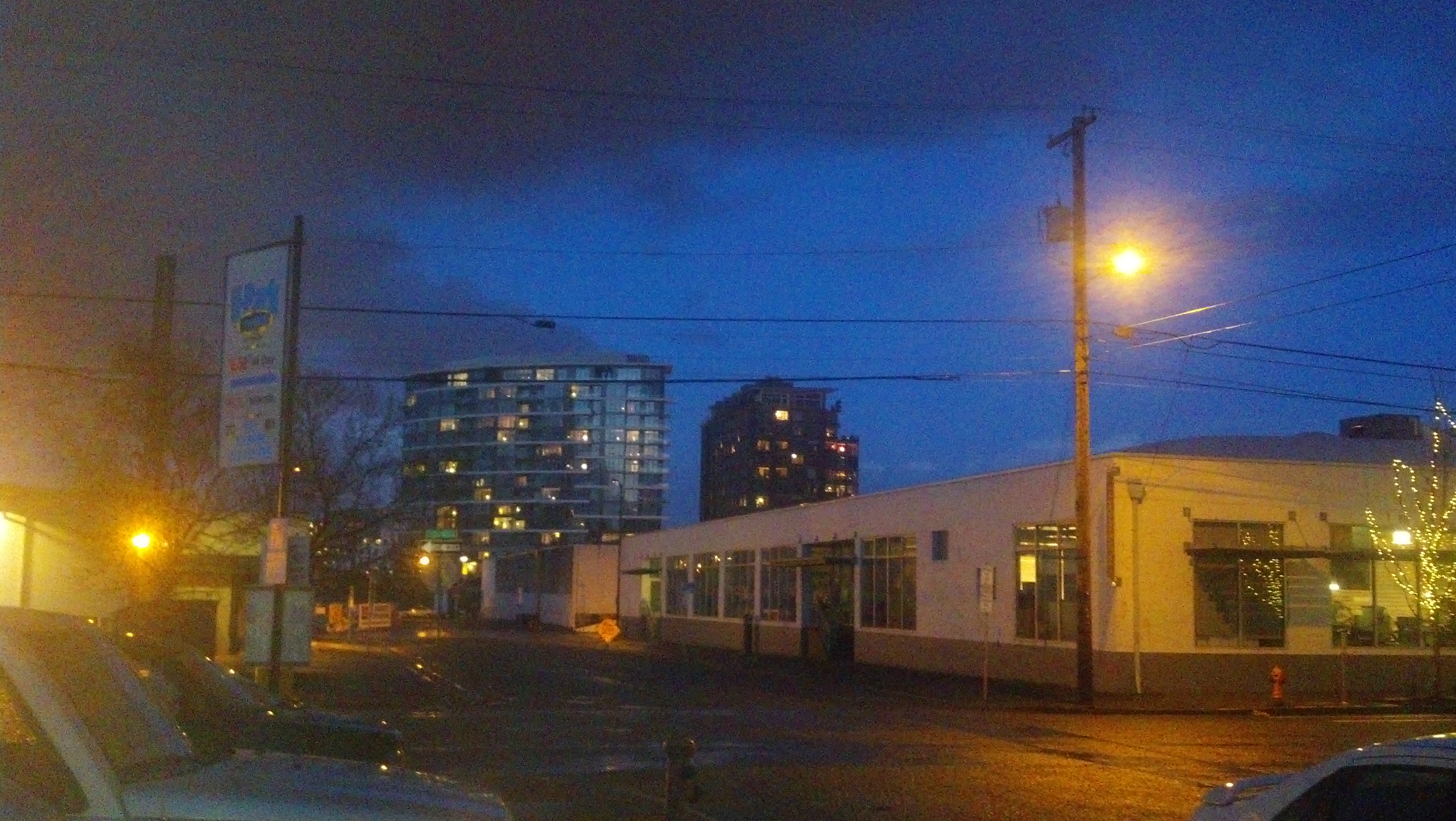
Sandro’s worldview is cynical but relatable, particularly to me now that I am in my mid-thirties. Watching this nearly fifteen years ago, I certainly would have sympathized with the artist, for even though I was a confused and adrift young man there was a large part of me still hungry for the future and excited about life’s opportunities. The enemy was the one who oppressed the artist and in all likelihood lived a bleak life devoid of color and creativity. At this time, I had a desire to be in the theatre, and within the next four years I would slowly but surely entrench myself in the local theatre scene in Portland, Oregon. I would get to play in important works like The Laramie Project and All My Sons. I would star as the titular character in a very experimental, yet ill-conceived production of Macbeth that reimagined the Scottish play as a social critique on the horrors of domestic violence. We acted in elaborate and – now looking back on it – quite dangerous fight scenes with obscene amounts of stage blood. I sit here and laugh about the absurdity of the production, as our director and playwright reimagined the ending as a well-meaning but poorly conceptualized commentary on female empowerment. In this conclusion, Lady Macduff survives and returns to Dunsinane to exact revenge for the murder of her son, as she bludgeons me (Macbeth) to death with a very large wooden club. I recall myself, Malcolm, Lady Macduff and Macduff skidding and slipping across the stage as surreptitiously placed blood packets exploded onto ourselves and the floor in a bizarre, Grand Guignol-like denouement. We even warned our guests in the first row that they were in the “flash flood” zone and that they would be sprayed with blood by the end of the show. I remember the lights coming up and looking out into the audience who were clearly stunned and perplexed by the fraught yet cartoonish bloodbath they just witnessed. I could see their faces racking their brains for their high school cliff notes of Macbeth. “Did Lady Macduff actually survive and come back and murder Macbeth?” “I don’t remember Macbeth beating the shit out of Lady Macbeth and strangling the bitch at the end…” The awkwardness even compounded as the audience exited the theatre – well, theatre is a generous term as I recall this was actually just an empty space attached to a yoga studio. We were forced to share the communal bathroom with our patrons and there we were – the whole cast in various stages of undress as we attempted to clean the blood stains from our faces and clothes. Many audience members diverted their gaze from ours, clearly eager to escape and forget this terribly wayward and convoluted Shakespearean abortion.
This wasn’t great art – not even good art, by any measurement. But it was fun and exciting and clearly meaningful for us at the time. I was getting paid to do this – three hundred dollars in fact, which was pennies but it symbolized that someone valued my time, professionalism, and creative input. Someone was actually paying me for my talent – something I had never experienced before, and as a fledgling theatre artist at the time, it was monumental for me. I also met one of my best friends in this production – someone who would become my artistic sister and would go on to form our short-lived but formative theatre company, Public Citizen Theatre. I was aware that this would not pay the bills and may not even be something you would include on your CV for professional advancement – but it was the building blocks for something stronger, something that would lay the groundwork and plant the seeds for a fruitful and long-sustaining creative life. I felt a spiritual kinship with the idealistic artist – like the nameless young painter in L’Avventura – free of expectation and renown but brave enough to take your paper, paint, and easel into the city to be inspired and create something beautiful.
But I was twenty-three once. And twenty-six. Even thirty. And even though I pray I haven’t fully sunk into the abyss, there is a large part of me that has turned jaded and cynical like Sandro, and wistful and longing like Roland in Modiano’s In the Café of Lost Youth. I no longer have that fiery, fulfilling confidence of a young artist unburdened by fear and self-doubt and ready to take on the world. You get to a point in your thirties where mortality is imminent, particularly if you have survived a serious health scare or the acrimonious disintegration of a long-term relationship. Or experienced the heartbreak of a beloved friend who died way too young. Your experiences do not make you special, but it does make you reflective. And this particular time in your life where you accrue a significant distance from the carefreeness and fearlessness of your early adulthood is now plagued by a foreboding cloud of uneasiness for what’s left. You are surrounded by a chorus of voices from friends and foes screaming in your ear what are you doing? What have you done? What do you have to show for? Our neurotic state is exacerbated by frivolous but effective images we see on social media inviting comparison. Our lives are shit and we have nothing to show for it. No money, no satisfying career, tenuous friendships that are hanging by threads as they start to head separate ways, guided by family and stability and legitimate adult responsibility. No soul-changing, exotic trips to Bali or the Maldives. No spiritual transformation or church on Sundays. We find ourselves hoping to run into ephemeral figures from our past like Roland on the streets of Paris – not for comfort or joy, but to remind us that our life is not just a memory. It’s still there – our hopes, our dreams, our future. Time hasn’t yet abandoned us and left us in the dust. We are still in our neutral zone, not thinking of the future but suspended in time, creating the lives we want.
There seems to be an unspoken rule that your twenties are for discovery and experimentation and your thirties are meant for career expansion. You should know what to do with your life by this time and you surely have learned and processed the relevant experiences accumulated in the aforementioned learning stage. And yet I’m still plagued by the crushing weight of shame and regret. And there is always that internal voice screaming you are a failure. The regular folk would call this a midlife crisis. Which to be fair is depressingly apt, considering your thirties are likely the midpoint of your life; not the typical image of a forlorn, misty-eyed fiftysomething.
The practical and analytical side of you attempts to rationalize your discontent and calm your existential anxiety – for who is anyone to dictate what your life should be or look like? The individualist mindset is American to the core. We are the sole proprietors of our fate and can manifest what we truly desire. Being American means being UNIQUELY YOU, damn what anyone else says.
But we are inundated since birth with constant messages, both explicit and implicit, of personal satisfaction and success linked to unlimited wealth accumulation and stratospheric careeristic milestones. The messages and their impact are amplified by the not-so-subtle inference that success is achieved by all means necessary. Poverty and lack of education is only a hindrance. Class, race, gender, and sexual preference? We’ve evolved beyond that. Do not let that “define” you, whatever that may mean. Lack of social or career connections? Make them yourself. No skills? Learn them. No money? Take out a loan. No talent – who cares? When has a lack of talent ever hindered someone from achieving their dreams? And your inability to free yourself from the jaw clasp of sinking, debilitating depression? You’re a fucking loser. Every obstacle is not just a challenge to overcome, but an opportunity to prove yourself worthy. Your inability to rise above is a personal failure, not a societal and hierarchical structure meant to impede success and keep you eternally working, striving, and ultimately dying for the elusive taste of the American Dream. We cannot even begin to fathom we have been hoodwinked into believing your authentic idealism was just a man-made myth concocted by the select few and well-connected. In other words, your failure is because you are lazy. If only you had worked harder. Planned better. Sacrificed more. Because admitting you were played is the worst sin. Because that would mean, above all else, that you were stupid.
It is hard to unlearn a lie. And it is exasperating to define success for yourself when so much of it has already been defined by others. Finding contentment seems like an antiquated belief circulated by the Amish or Mennonite community, so foreign to those of us who are accustomed to constantly crave, seek, and acquire anything and everything available to us. In all we do – professionally, personally, spiritually – advancement is the key component to a good life. You work your way from the bottom to the top, finally finding brilliant success in the highest echelons of your career or craft. Your personal life is full of comparable practices that will lead to a better you – exercise more, invest more, have children, buy a bigger house, send your kids to better schools, use moisturizer, eat healthy, floss more, fuck more. It’s a constant mindfuck of visceral bombardments whispering that you are still not enough. There is more to do and things to improve and if you haven’t figured it out yet, you have not reached the peak of self-satisfaction and lasting success. Even your spiritual life or lack thereof is an obnoxious pit of self-doubt. Maybe your never-ending depression and lack of fulfillment is rooted in your spiritual conscience. So you should meditate more. Journal every day. Get yourself out of the funk, because clearly you are a fuck-up and a failure.
None of these practices are bad, per se. Everyone from your mother to your physician would recommend you eat better and exercise more, and there’s nothing wrong in meditation or journaling, or god forbid, seeing a therapist to work through your trauma. But I cannot be the only one who feels overburdened with the suffocating realization that we can never rid ourselves of the nagging notion that whatever we do will never be enough. It will never be enough for the elite who have already cruelly defined what success is; nor will it be enough to quench our insatiable thirst for self-validation. And all of this negative energy is exacerbated to the hilt because the artist is always judged the hardest. Not only does the artist very rarely have the monetary results to show for their work, but the viability and relevance of their art is always called into question. Was it worth it? Because if we do not have a dollar amount or critical appreciation attached to our work, the doubt creeps in and our self becomes fractured. We fail to see a purpose for our lives.
This spiritual dilemma is the crux of what binds Antonioni’s wayward world of L’Avventura to Modiano’s fragmented memory piece In the Café of Lost Youth: the fruitless search for purpose and meaning in a superficial world. We spend our precious youths searching for every kind of external validation under the sun without ever defining what happiness means for us. We become forlorn, nostalgic, and haunted like Roland, retracing the steps of our youths hoping there is still some trace remaining – some faint scent of the past lingering amongst the ruins. And we carry the heavy weight of regret and longing, knowing that we cannot do it again, but possessing a small glimmer of hope that maybe at least we can understand why? And conversely, we are cynical and jaded like Sandro. We have seen the man behind the curtain and know that it’s all a ruse. Sandro is the epitome of success: handsome, wealthy, charming, respected – but he has sold his artistic soul for the empty success of modern-day consumerism. Instead of living the life of an artist, he is confined to the life of a hack, spending his days cruising amongst ostentatious dinner parties and wealthy, but insipid, bourgeois high society in the Sisyphean effort to acquire more and spend more. He has reached a point where he realizes he has been played – he sought success that was defined by others instead of pursuing a future fashioned by himself, and he alone. He once had the soul of an artist but now in middle-age he finds that his soul is empty.
This is the precarious psychological state I have found myself in recently, somewhere between longing and unceasing pessimism. I long for the earlier days of wild freedom and abandon, where I could do shitty theatre in a yoga studio, read plays, and work alongside other artists just to create. I miss working with my fellow producer and crew as I directed The Maids and Martin Crimp’s Dealing with Clair. I miss commissioning a weekly summer reading series with other actors to stage long-forgotten theatrical plays. I miss sitting with my producer and sifting through emails, reworking and re-editing countless, time-consuming grant proposals, and coming up with graphic design concepts for our publicity material. But then I stop and hear Sandro’s sharp voice in my head saying “who needs beautiful things nowadays? How long will they last?” If I traveled back to my twenty-six year old self, walking amongst the green, tree-lined streets of Southeast Portland on a crisp autumn evening at golden hour, Macbeth script in-hand, filled with optimism and a bubbling sense of purpose as he dutifully entered one of the quirky mid-century craftsman homes to start rehearsal, what would I say to him? Would I conjure up the gruff, but brutal tough love of Sandro and smack the script out of my hand and plead for my younger self to stop this futile artistic pursuit? This path will not feed your ego and certainly not fill your pockets – stop now, be reasonable, and find something sensible to do. You may not be happy, or fulfilled, but you will have food on your plate and money in the bank. At least you will be secure.
Or in another twenty years will I be like Roland, wandering down Southeast Salmon Street looking for the identifiable markings of a past I once lived? Will I knock on the door of the old craftsman and explain I was here once? We rehearsed a show here until the dead hours of night. It was goofy and absurd and there’s probably still dents on the floor in the attic upstairs where we would play with wooden clubs and deadened knives. Maybe I will turn the corner and walk up to Hawthorne Street, looking for the old pizza joint where we’d grab a beer afterwards. A further walk up toward Salmon Street and I’d come upon the Safeway where I used to buy cheap Chinese food for my first boyfriend and I. We were young and poor, but we didn’t care. I’ll walk amongst Division Street and try to find the house where those Irish boys lived while on an academic exchange. We did so much cocaine and drank so much, but we still woke up early for brunch the next morning. I will walk and remember and try to convince myself that nothing has changed. At least not too much. I’ll remember this neutral zone in my life and remind myself that it wasn’t a lie.
“Sometimes you remember certain episodes of your life and you need proof that you haven’t dreamed them,”
writes Patrick Modiano. I’ll remind myself it wasn’t a dream. I’ll convince myself that I’m not old. I’m not young, but I’m not too old to think everything is over. I’ll reassure myself it wasn’t for naught. I’ll find some meaning through all the fog.
But there is another option…
You can have grace. At the end of L’Avventura, as we see Claudia running through the empty rooms and hallways of a sprawling hotel, littered with trash and remnants of the previous night’s lavish party, she catches Sandro on a sofa in a compromising position with a younger woman. The look of embarrassed resignation upon Claudia’s face shatters you, as you can feel both her heartbreak and childish foolishness for ever believing that a faithful, meaningful relationship awaited her with this man. She runs outside and up to the hotel rooftop, Sandro chasing her, as they eventually stop and overlook a dilapidated church. Sandro sits and is overcome with emotion as he begins to tear-up. The most magical and suspenseful moments pass as Claudia lifts up her hand, time silent and seemingly suspended. And in one act of grace, she gently caresses Sandro’s head. The movie fades to black, both of them wordlessly staring off into the distance at Mount Etna.
Grace. It’s a shocking act of grace from Claudia at the end of L’Avventura, a potent symbol not just of forgiveness and a release of shame but an acceptance of our imperfections. Perhaps even more startlingly, it’s Antonioni’s triumph of radical artistic reinvention. In the face of form, character, and narrative structure, Antonioni has taken a wrecking ball to our pedestrian view of storytelling and created something beautiful and eternal that will stand stronger and more brightly than the temporal structures Sandro has built his entire life upon. Like a true artist, Antonioni is both a disruptor rejecting all standard tropes and traps of conventional form, and a mirror for society as he bravely and brazenly reflects our deep and impenetrable wounds. He never fears leading the audience to confront difficult questions, and he very rarely provides easy answers. But the final shot – the last act of grace, no matter how feeble, or how small, or how hesitant – reveals that throughout all of life’s ambiguities, catastrophes, pitfalls, and failures, that we must allow ourselves grace. Not just for others, but for ourselves. Only then, when we allow ourselves to accept our flaws, acknowledge our regrets, and make peace with our past will we be able to truly start our adventure.
So that’s what I will choose to do. Allow myself grace. I cannot change my past, nor should I want to. It’s why I’m here now. And regardless of what happens, I will never stifle my creative fire. I’m still that young man walking amongst the freaks and weirdos of Portland, dreaming of an avant-garde theatre career. And although that may never happen, I’ll still be an artist, and I’ll still try to retain that infectious sense of joy and possibility that a young artist has. No matter how exhausting and impossible the struggle may be, I will not let others define what success means to me. I won’t commit the sinful act of betrayal and compare myself to others. Their success is not my success. And my idea of lasting contentment and fulfillment is not theirs. I will respect my journey and follow it where it may lead, while attempting with all my might to silence the choir of loud voices telling me I’m not enough. I may never reach the artistic heights of Antonioni, but I can aspire to honor his iconoclastic and courageous zeal to go against the tide and create something beautiful and real.
I have enormous empathy for the Sandros and Rolands of the world, but I do not want to end up like them. Because ultimately it is a choice. A determinate choice not to be jaded, cynical, or defeated. No one said it would be an easy choice, but it is a necessary one.
Neutral zones may be temporary, but it doesn’t mean you will never return. Perhaps I’ve just found myself in a different one at this stage of my life, suspended in time and waiting for the next adventure to begin. I will be more alert this time.
 Let me be frank
Leave a comment